Source Customized Printed Polyester Feather Flag for Events
Compare 30 listings for customized printed polyester feather flag options featuring dye-sublimation graphics, various pole materials, and portable designs. Buyers can evaluate sizes, lead times, and packaging details from suppliers in Shanghai.
Key considerations
Products List




Comprehensive Sourcing Guide
Customized Printed Polyester Feather Flag Sourcing Guide
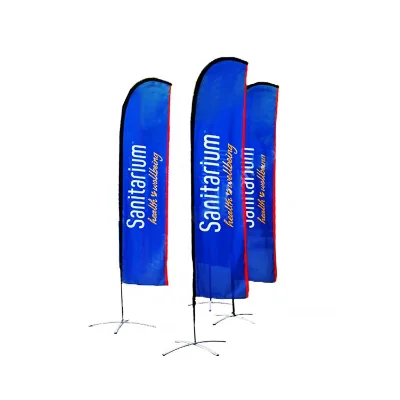
The customized printed polyester feather flag serves as a high-visibility outdoor advertising solution designed for dynamic brand promotion in open spaces. These flags, often referred to as teardrop or beach flags, utilize a lightweight pole and a tensioned fabric banner to create a fluttering effect that captures attention from a distance. The core material is typically polyester or knitted polyester, chosen for its durability and ability to hold vibrant, full-color graphics without significant fading. This makes them ideal for events, retail promotions, and construction site signage where visibility is paramount.
Procurement of these items requires a focus on the specific customization capabilities of the supplier, as the product is rarely a standard off-the-shelf item. Buyers must verify that the manufacturer can accommodate custom dimensions, shapes, and printing requirements to match their specific branding needs. The flexibility in design allows for unique configurations, ranging from standard teardrop shapes to square variations, ensuring the flag aligns perfectly with the intended marketing message and physical environment.
Product Scope and Observed Listing Signals
When evaluating product listings, buyers should look for specific signals indicating a robust customization workflow. The observed market data highlights that these flags are available in a wide range of sizes, including specific heights such as 2.8m, 3.3m, 4.2m, 4.6m, 5m, and 5.5m, alongside fully customized options. This variety suggests that suppliers are equipped to handle projects of different scales, from small indoor displays to large outdoor installations. The presence of multiple size options indicates a production line capable of adjusting pole lengths and fabric dimensions to meet precise spatial requirements.
Another critical signal in the product scope is the variety of pole materials and printing techniques offered. Listings frequently mention both fiberglass and aluminum poles, allowing buyers to select based on their need for flexibility versus rigidity. The printing technology is consistently noted as dye-sublimation or digital printing, often with high-resolution specifications like 7201440dpi or 14401440dpi. These details confirm that the product scope extends beyond simple fabric printing to include high-fidelity graphic reproduction, which is essential for professional advertising campaigns.
Technical Specifications to Verify
Buyers must rigorously verify the technical specifications related to the printing process to ensure color accuracy and longevity. The primary verification point is the printing method, which should be confirmed as full-color dye sublimation graphics. This process involves infusing ink into the polyester fibers, resulting in images that are resistant to peeling and fading. It is essential to confirm the resolution of the print, as specifications like 8-pass 7201440dpi or 14401440dpi directly impact the clarity of the final product, especially for detailed logos or photographic imagery.
The structural integrity of the flag system is another area requiring detailed verification, specifically regarding the pole material and installation mechanism. Suppliers may offer fiberglass or aluminum poles, each with distinct characteristics; fiberglass offers flexibility for windy conditions, while aluminum provides a rigid structure. Buyers should also check the installation features, looking for descriptions that emphasize lightweight, portable, and easy setup capabilities. Additionally, the life expectancy of the product, often cited as 1 to 5 years depending on the ink used, should be cross-referenced with the specific ink technology employed by the supplier to ensure it meets the project's duration requirements.
Compliance and Safety Documentation
While specific test results are not universally provided in all listings, buyers should request documentation regarding the standards the manufacturing process adheres to. Some suppliers indicate compliance with international standards such as SGS and ISO 9001:2008, which serve as indicators of a structured quality management system. It is crucial to verify if these certifications apply to the specific production batch or the facility's general operations. Buyers should ask for current certificates to ensure that the supplier maintains these standards consistently, rather than relying on outdated or generic claims.
Safety and export compliance are also vital considerations, particularly for international shipments. The product origin is frequently listed as Shanghai, China, or generally as China, which necessitates checking for any specific export regulations or safety standards required in the destination market. Although specific safety test data for wind resistance or fire retardancy is not explicitly detailed in the provided facts, buyers should inquire about these attributes if the flags are intended for high-traffic public areas or indoor events with strict fire codes. Ensuring the supplier can provide relevant safety documentation is a key step in mitigating liability risks.
Cost Drivers and Commercial Terms
The cost of customized printed polyester feather flags is driven primarily by the complexity of the customization, the quantity ordered, and the specific materials selected. The observed minimum order quantity (MOQ) ranges from 1 piece to 100 pieces, offering flexibility for both small promotional runs and larger bulk orders. Buyers should note that while some suppliers offer free samples, the cost of the final product will vary based on the chosen size, pole material, and the intricacy of the dye-sublimation print. Understanding these variables helps in budgeting accurately for the total project cost.
Commercial terms regarding delivery and lead time are significant factors in the procurement process. The lead time for samples is often very short, typically 1 day after graphic confirmation, while production lead times can range from 2 to 5 days. Delivery methods include express couriers like DHL, TNT, and FedEx, as well as air or sea freight, depending on the urgency and volume of the order. Buyers must align their project timelines with these lead times and shipping options, ensuring that the chosen method meets the deadline for the event or campaign launch.
Supplier Qualification and Quality Control
Supplier qualification should focus on their ability to manage the entire production lifecycle, from artwork submission to final packing. Buyers should verify that the supplier accepts standard digital file formats such as PDF, JPEG, AI, PSD, and EPS, which ensures a smooth workflow for graphic design teams. The quality control process should be transparent, with suppliers demonstrating their ability to handle custom orders without compromising on print precision or material integrity. A supplier's willingness to provide samples and their response time to artwork requests are strong indicators of their operational reliability.
Quality control also extends to the packaging and shipping process to prevent damage during transit. The observed packing methods include individual carry bags, export cartons, and rolls with oil paper on paper tubes, depending on the model. Buyers should confirm that the packaging is robust enough to protect the flag and pole during shipping, especially for international orders. Additionally, the supplier's warranty, which may cover color lasting for 2 to 3 years, should be clearly understood and documented. This warranty serves as a commitment to the product's durability and the supplier's confidence in their materials and printing techniques.
Long-Term Procurement Checks
For long-term procurement, buyers should establish a relationship with suppliers who demonstrate consistency in their product quality and service. The ability to produce flags with a life expectancy of 1 to 5 years suggests that the materials and inks used are of high quality, but this should be validated through repeat orders. Buyers should monitor the consistency of the print quality and the durability of the poles over time, ensuring that the supplier maintains the same standards across different batches. This consistency is crucial for maintaining brand image across multiple marketing campaigns.
Finally, buyers should regularly review the supplier's adaptability to changing market needs and technological advancements. The flag market is dynamic, with new printing technologies and materials emerging frequently. A qualified supplier should be able to offer updates on the latest dye-sublimation techniques or pole materials that enhance performance. By maintaining open communication and regularly assessing the supplier's capabilities, buyers can ensure that their procurement strategy remains effective and that they continue to receive high-quality customized feather flags that meet their evolving advertising needs.
FAQs
What materials are used for the flag and pole?
The flags are made from polyester or knitted polyester, while the poles are constructed from either fiberglass or aluminum. This combination ensures durability and lightweight portability for outdoor advertising use. The specific material choice depends on the model selected, such as the Tj-15 or Tj-001, allowing buyers to choose based on their environmental needs and budget constraints.
Can I get a free sample before ordering?
Yes, free samples are available for beach flags to help verify quality before bulk production. The sample finish time is typically one day after the graphic is confirmed. This allows buyers to check the dye-sublimation printing quality and pole stability. It is a practical step to ensure the final product meets your specific advertising and promotional requirements before committing to a larger order.
What is the lead time for production?
The standard lead time for production is two to five days after order confirmation. This timeframe applies to most customized orders, including those requiring specific sizes like 2.8m or 5.5m. Buyers should account for shipping time via DHL, FedEx, or sea freight when planning their campaigns. Early graphic submission helps ensure the fastest possible turnaround for urgent promotional events.
What printing techniques are used for the graphics?
The flags utilize full-color dye sublimation printing or digital printing with high precision up to 1440x1440dpi. This technique ensures vibrant, long-lasting colors that resist fading. The process supports various file formats including PDF, JPEG, AI, and PSD. It allows for detailed, custom artwork to be printed accurately on polyester fabric, making it ideal for high-visibility advertising displays.
What are the standard sizes available for these flags?
Standard sizes include 2.8m, 3.3m, 4.2m, 4.6m, 5m, and 5.5m, with customization also available. These heights are suitable for various outdoor settings, from beach events to trade shows. The teardrop or square shapes can be tailored to fit specific branding needs. Buyers can select from these common dimensions or request custom measurements to match their exact display requirements.
How long do the colors last on the flag?
The colors typically last between two to five years, depending on the ink quality and environmental conditions. Some models offer a warranty for colors lasting two to three years. The dye-sublimation process helps embed the ink deeply into the polyester fabric, enhancing durability against sun and wind. This longevity makes the flags a cost-effective solution for long-term advertising and brand visibility campaigns.